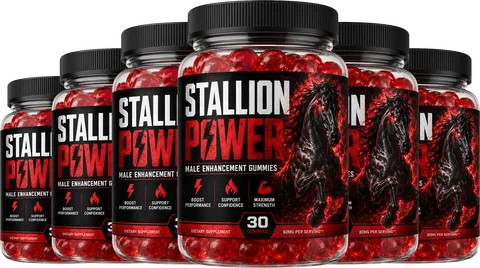
Horny Goat Weed and Tribulus Terrestris are two of the nine ingredients listed for Stallion Power™. Horny Goat Weed is the common name for plants in the genus Epimedium, a group of woodland perennials. Tribulus Terrestris is a low, sprawling plant with yellow flowers and spiny fruit found in warm regions worldwide.
Why look at plants at all · Epimedium: the plant behind the name · Tribulus Terrestris: a ground-hugging survivor · Reading the entries on a label · A quick botany vocabulary · Fitting it into your routine
- Horny Goat Weed refers to plants in the genus Epimedium.
- Epimedium species grow in woodlands, with many native to China.
- Tribulus Terrestris is a sprawling annual with small yellow flowers.
- The brand lists no amounts for either ingredient.
Why look at plants at all
Ingredient lists can feel like a foreign language. A short profile of each plant turns names into pictures: a leafy woodland perennial here, a spiny ground-hugger there. That is all this guide offers. It describes botany and origin, not outcomes.
The brand lists both plants among nine ingredients and states that the label is fully disclosed. See the formula page for the whole set. Stallion Power presents the list openly, which makes a plant-by-plant look like this one possible.
Epimedium: the plant behind the name
Epimedium is a genus of flowering perennials in the barberry family. Dozens of species exist, with a large share native to China and others spread across Asia and the Mediterranean. They tend to grow in shaded, wooded slopes and are valued in gardens for their heart-shaped leaves and delicate, spurred flowers.
The common name Horny Goat Weed is the English label that stuck for the genus. Because the genus includes many species, a label that gives the Latin word Epimedium in parentheses is helping you see which plant group is meant.
Gardeners often grow Epimedium as ground cover under trees, where its leaves form a dense, tidy carpet. In spring the foliage can emerge with bronze or reddish tones before turning green, a detail that makes the plant easy to spot once you know it.
Ready to start your routine?
Stallion Power: a once-daily gummy, one a day at the same time, with a 60-day money-back guarantee.
Order Stallion Power NowTribulus Terrestris: a ground-hugging survivor
Tribulus Terrestris is a low-growing annual that spreads along the ground in a mat. It has small compound leaves, bright yellow five-petaled flowers and a hard, spiny fruit that can catch on shoes and tires, which earned it the nickname puncture vine in some places.
It thrives in warm, dry regions of southern Europe, Asia, Africa and Australia, and it often shows up on disturbed ground, roadsides and sandy soil. On a label it is typically written in full Latin, as it is here.
Its seed pods break into several spiny sections, each with sharp points. That shape is the origin of the Latin word tribulus, which refers to a type of spiked object. Knowing this helps the name feel less abstract.
Reading the entries on a label
Two things are worth noticing. First, one entry uses a common name with a Latin hint and the other uses only the Latin name. Both styles are normal. Second, neither entry carries a published amount. The only amount the brand shares is the natural caffeine, at 5 mg per gummy.
If you enjoy going deeper, MedlinePlus offers neutral reference pages about many botanicals, which is a good way to compare your reading with a general source.
- Epimedium: perennial, woodland, many species, leaves used
- Tribulus Terrestris: annual, ground cover, warm climates, spiny fruit
- Both appear among nine ingredients with no proprietary blend, as stated by the brand
A quick botany vocabulary
A few terms make plant profiles easier to follow. A genus is a group of closely related species, such as Epimedium. A species is a single kind of plant, such as Tribulus terrestris. A perennial returns year after year, while an annual completes its life cycle in one growing season.
With those terms, the two profiles above come into focus: one a long-lived woodland group, the other a fast-growing annual of open, sunny ground. Both are simply plants, and this guide describes them the way a field guide would.
Fitting it into your routine
Understanding an ingredient list is part of choosing any daily habit with confidence. The directions stay simple: one gummy daily, ideally at the same time each day, such as with breakfast.
To see how everything fits into a day, read the how it works guide. If you are comparing pack sizes, the pricing page shows 2, 3 and 6 bottle options, and Stallion Power is sold on the brand's own website only.